
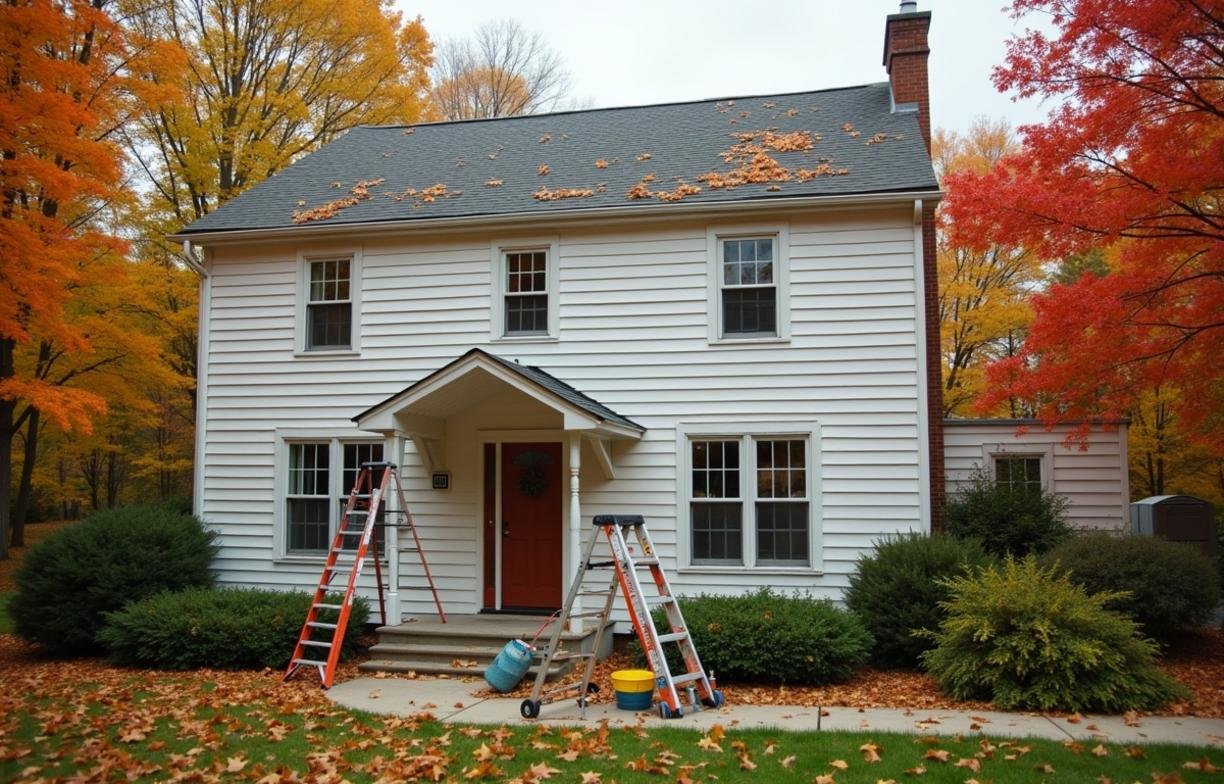
I schedule exterior paint in fall because September offers dry siding, steady temperatures, and shorter wait times before cold nights begin.
By October, the calendar gets less forgiving. A good exterior paint job is not just about a sunny afternoon. It depends on surface temperature, overnight lows, moisture content, dew point, cure time, and how many daylight hours are left after prep.
The weather window is narrower than it looks
Most exterior latex paints need the air and surface temperature to stay above 50°F during application and early drying. Some modern acrylic products are rated down to 35°F, but that rating usually assumes the surface is dry and temperatures are not falling fast after sunset. Sherwin-Williams and other major coating manufacturers publish product data sheets with exact minimum application temperatures, and those sheets matter more than the front label.
The tricky part is that siding cools before the air does. North-facing walls, shaded trim, and metal doors can sit several degrees colder than the forecast. If the forecast says 46°F at 7 a.m., parts of the house may still be below the product limit at 10 a.m.
The U.S. National Weather Service tracks average first-freeze dates by region, and in many northern and interior U.S. areas, the first 32°F night arrives in October. Paint applied too close to that first freeze can skin over without developing a strong film underneath.
I try to leave at least 48 hours after painting before a predicted frost. For oil-based primers, bare wood, or heavy-bodied coatings, I prefer a 72-hour buffer.
Moisture is the real reason I avoid waiting
Fall air can feel dry, but surfaces often hold moisture longer. The U.S. Forest Products Laboratory notes that wood changes dimension as moisture content changes, and paint adhesion suffers when wood is too wet. Many paint manufacturers set a maximum wood moisture content around 15% before coating.
That number is not guesswork. A pin-type moisture meter can check siding, trim ends, fascia, and lower clapboards in seconds. I pay closest attention to horizontal ledges and butt joints because those areas hold water after morning dew.
Morning dew is a bigger fall issue than brief rain. In September, I may be able to start painting by 9:30 a.m. In late October, the same wall might not dry until 11:30 a.m., and the sun may be off it by 2:45 p.m.
The dew point test I use
I check the dew point, not just the chance of rain. If the surface temperature is within 5°F of the dew point, condensation can form on the siding. That thin film may be invisible, but it can weaken adhesion and cause early blistering.
A simple infrared thermometer helps here. I compare the siding temperature with the hourly dew point from the National Weather Service forecast. If the wall is 51°F and the dew point is 48°F, I wait.
September prep saves the paint job
Prep takes longer than painting, especially on older houses. Washing, scraping, sanding, spot-priming, caulking, and replacing failed trim can consume three to five working days before the first finish coat goes on.
The Painting Contractors Association’s P14 standard defines four levels of surface preparation for repainting work and notes that the level chosen affects the adhesion, durability, and appearance of the finished surface. That distinction matters because “paint the house” often hides cracked glazing, open miters, loose caulk, mildew, and chalky siding.
I do not power-wash and paint the next morning in fall. Wood siding can take two or more dry days to return to a safe moisture level after washing, especially if the temperature is below 70°F. Fiber cement dries faster, but joints and butt ends still need attention.
Caulk also needs time. Many acrylic-latex caulks need at least 2 hours before painting, while some elastomeric sealants need 24 hours or more. If the bead is thick, shaded, or applied in cool weather, cure slows.
The order I follow before paint
I wash first, then let the house dry. After that, I scrape loose paint to a firm edge, sand glossy patches, prime bare spots, caulk gaps smaller than 1/4 inch, and paint from the shady side toward the sun.
For gaps wider than 1/4 inch, I do not fill the whole void with caulk. I use backer rod first, because thick caulk shrinks, skins over, and can split during winter movement.
Which fall timing fits your situation?
Not every house needs the same schedule. A one-story vinyl-sided home with painted trim is different from a 1920s wood clapboard house with peeling fascia and old oil paint.
| Situation | Best timing | Why |
|---|---|---|
| Sound paint, minor fading, little scraping | Early to mid-September | Two coats can be done within stable daytime highs of 60°F to 75°F |
| Bare wood patches, peeling trim, failed caulk | Late August to mid-September | Prep and primer need extra dry time before cold nights |
| Brick, stucco, or masonry coating | September only in cool regions | Masonry holds moisture and needs longer drying after rain |
| South or coastal climate with mild nights | September through early November | Workable if overnight lows stay above product limits |
| Northern climate with first frost in October | Finish by the last week of September | Gives paint several dry days before 32°F nights |
| Heavy shade or wooded lot | Start earlier than neighboring homes | Dew persists longer and algae-prone siding dries slowly |
If I can only choose between a rushed late-October job and waiting until spring, I wait unless the exposed material is at risk. Bare wood end grain, cracked window sills, and open trim joints can absorb water all winter, so I at least prime those vulnerable spots.
One targeted fall repair may be smarter than a full repaint. Spot-prime bare wood, seal upward-facing trim cracks, and paint the weather side if that face is failing faster than the rest of the house.
Paint choice changes as temperatures drop
Acrylic latex is usually my first choice for exterior repainting because it handles expansion and contraction better than brittle old coatings. The U.S. Forest Products Laboratory has long recommended quality acrylic latex systems for wood exteriors because they allow some moisture vapor movement while resisting weathering.
Low-temperature acrylic paints can be useful in fall. Some are rated for application down to 35°F, which can add two or three working weeks in colder regions. I still avoid applying them when the temperature is falling toward the minimum within a few hours.
Oil-based primer has a place on tannin-rich woods, rust-prone metal, and certain chalky surfaces. It dries more slowly in cool weather, and overnight dew can dull or contaminate the film before it is ready for topcoat.
One-coat claims need context
One-coat exterior paints work best when the existing color is similar and the surface is already sound. A faded beige going to warm white is not the same as red siding going to pale gray.
For severe color changes, porous wood, or weather-beaten siding, I plan on two finish coats. Two thin coats usually outperform one heavy coat because each film dries more evenly.
October creates production problems contractors cannot ignore
By October, professional painters lose hours at both ends of the day. A crew that can paint from 8 a.m. to 5 p.m. in August may only have a safe coating window from 10:30 a.m. to 3:30 p.m. after dew and before surface cooling.
That affects scheduling. Even a modest two-story exterior can need 40 to 80 labor hours when prep is included. Shorter days stretch the job across more calendar days, which increases exposure to rain interruptions.
Ladders and staging are also harder to manage in damp leaves, soft soil, and early frost. OSHA fall-protection rules apply at 6 feet in construction, and wet ground makes setup slower for anyone working safely around eaves and gables.
The paint film itself does not care that winter is coming. It only reacts to chemistry, temperature, and moisture. If those three conditions are poor, a premium coating can fail like a cheap one.
The cutoffs I use before booking the job
I look for daytime highs between 55°F and 80°F, overnight lows above the paint’s listed minimum, and no rain for at least 24 hours before and after each coat. For bare wood or deep shade, I want a longer dry spell.
I also check the long-range forecast for trend, not perfection. Three mild days followed by a freeze is riskier than six average days with stable nights. Falling temperatures slow drying more than many homeowners expect.
For wood siding, I want moisture readings at or below 15%. For masonry, I avoid painting after wind-driven rain, even if the surface looks dry, because stucco and brick can hold water below the face.
If the house needs extensive scraping, primer, and two coats, I aim to start before mid-September in cold regions. If the house only needs trim and doors, the window can stay open later, provided the product data sheet supports the forecast.