Surge protection upgrades are worthwhile if your home has sensitive electronics, frequent storms, or older wiring issues. Plug-in strips help in limited ways, but they do not replace protection installed at the electrical panel.
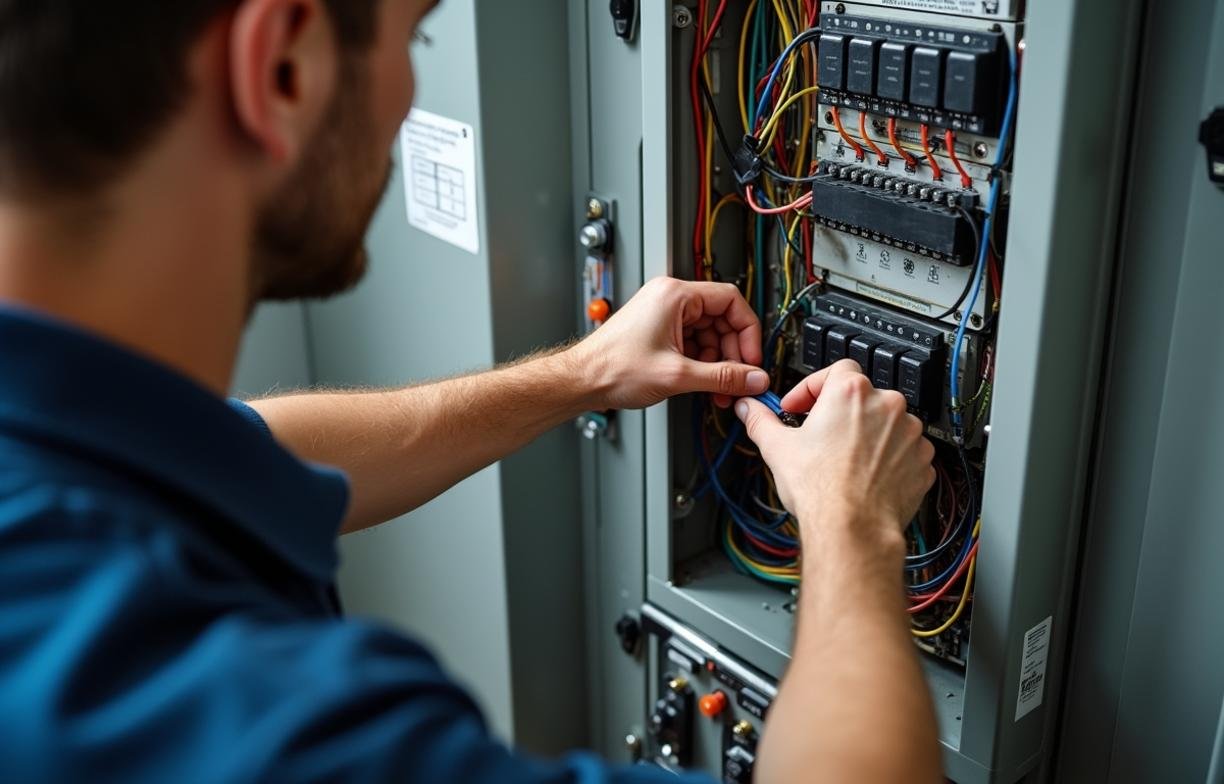
A licensed electrician can check grounding, panel capacity, service equipment, and code requirements before adding a whole-home surge protective device. That matters because surge protection only works well when the path to ground is short, solid, and correctly bonded.
Why panel-level surge protection matters now
The National Electrical Code, published by the National Fire Protection Association, began requiring surge protection for dwelling unit services in the 2020 NEC for new homes and service replacements under Section 230.67. Many existing homes still do not have it because older panels were installed before that rule appeared.
A whole-home surge protective device, or SPD, is usually installed at the main service panel or meter equipment. It diverts excess voltage from line to ground or neutral before the surge travels through branch circuits.
Lightning is not the only concern. The National Institute of Standards and Technology notes that many damaging surges come from utility switching, nearby faults, motors cycling on and off, and equipment inside the building. Central air conditioners, well pumps, refrigerators, and pool pumps can create repeated smaller transients.
Those smaller hits matter because electronics fail from cumulative stress. A TV or modem may not die the day a surge occurs. Instead, power supplies, capacitors, and circuit boards degrade over months after repeated voltage spikes.
Signs your home is a good candidate
If you have had two or more unexplained failures of electronics within 12 to 24 months, an electrician should inspect more than the outlet strip. Repeated router failures, garage door opener issues, smart appliance board replacements, or flickering after HVAC startup can point to voltage disturbances.
Homes with overhead utility service are exposed to more surge activity than homes with underground service. Overhead lines can pick up induced voltage from nearby lightning even when there is no direct strike.
You should also consider an upgrade if you recently added expensive equipment. Heat pumps, EV chargers, induction ranges, solar inverters, home theater receivers, and smart panels all increase the value of what is connected to the wiring system.
The Insurance Institute for Business & Home Safety’s Thunderstorm Ready guidance lists a home lightning surge protector among the steps property owners should take before severe weather is in the forecast. Florida, Louisiana, Texas, Oklahoma, and parts of the Midwest see high lightning density compared with many northern and western states.
What an electrician checks before installing one
An SPD is not a magic box. It depends on grounding and bonding being correct.
The electrician should verify that the main bonding jumper is present in the service equipment, that neutral and ground are separated in subpanels, and that grounding electrode conductors are correctly connected. A loose neutral can create overvoltage conditions that no consumer surge strip is designed to solve.
They may also check whether your panel has room for a dedicated two-pole breaker. Many Type 2 SPDs connect through a 15-amp or 20-amp two-pole breaker, depending on the manufacturer’s instructions. Some panels need a listed breaker-compatible model, not a generic device.
Lead length matters. UL and manufacturer instructions commonly recommend keeping SPD conductors as short and straight as possible. Long wires add impedance, which can reduce surge clamping performance during a fast transient.
The standards that should appear on the label
Look for devices listed to UL 1449, the main safety standard for surge protective devices in North America. The label should identify the SPD type, voltage rating, nominal discharge current, and short-circuit current rating.
For a typical U.S. home with 120/240-volt split-phase service, the SPD must match that system. A device made for a three-phase commercial panel is not interchangeable with residential service equipment.
A common residential target is a Type 2 SPD with a nominal discharge current rating of 10 kA or 20 kA. Many higher-grade residential units advertise surge current ratings from 50 kA to 100 kA per phase, though ratings are not always directly comparable across brands.
Why grounding changes the result
The NEC generally requires one grounding electrode system for the service, bonded together if multiple electrodes exist. That can include ground rods, metal underground water pipe, concrete-encased electrode, or building steel where present.
If ground rods are used, the NEC requires a single rod to test at 25 ohms or less to earth, or a second rod must be installed. Many electricians install two rods because field resistance testing adds time and equipment.
A high-resistance, damaged, or disconnected grounding path can leave surge energy seeking other routes. Those routes may include coaxial cable, Ethernet lines, appliance frames, or plumbing connections.
Type 1, Type 2, and plug-in protection compared
Surge devices are grouped by where they are installed. The type affects who can install it and what it protects.
| Option | Installed where | Best fit | Key limit |
|---|---|---|---|
| Type 1 SPD | Line side or load side of service equipment | Meter-main setups, exterior service gear, homes with severe exposure | Usually requires electrician and utility coordination |
| Type 2 SPD | Main panel or subpanel load side | Most existing homes with modern panels | Needs compatible breaker space and proper grounding |
| Type 3 plug-in strip | At outlet near equipment | Computers, TVs, gaming systems, office gear | Must be downstream of panel protection for best performance |
A Type 1 SPD is often used at service entrance equipment and can handle surges before they reach the panel bus. Some utilities offer meter-based surge devices, but ownership, warranty terms, and replacement rules differ by utility.
A Type 2 SPD is the most common electrician-installed upgrade for existing homes. It sits at the panel and protects multiple circuits at once, assuming the grounding system is sound.
A Type 3 plug-in protector should be close to the equipment it protects. UL guidance treats these as point-of-use devices, not service equipment protection. Many require at least 30 feet of conductor distance from the panel to coordinate properly with upstream protection.
Which option fits your situation
If your panel is modern, grounded, and has two adjacent breaker spaces, a Type 2 SPD is usually the practical choice. Installation often takes one to two hours when the panel is accessible and no repairs are needed.
If you are replacing a main panel, upgrading service from 100 amps to 200 amps, or installing a meter-main, ask about Type 1 protection during the same project. The 2020 NEC rule for dwelling services is often triggered during service replacement in jurisdictions using that code edition or newer.
If your main concern is one expensive workstation, audio rack, or gaming setup, keep a high-quality plug-in protector there even after panel protection is installed. Point-of-use protection adds a second layer and helps with surges traveling through data or coax lines.
If your home has ungrounded two-prong outlets, focus first on grounding and wiring corrections. A three-prong surge strip plugged into an ungrounded receptacle cannot divert surge energy as intended.
For homes with solar, battery storage, or standby generators, have the electrician review the inverter, transfer switch, and generator panel arrangement. Surge protection may be needed at more than one panel because power paths change during backup operation.
What it typically costs to have installed
A panel-mounted whole-home SPD commonly costs about $300 to $700 installed for a straightforward Type 2 residential installation. The lower end usually assumes available breaker space, a compatible panel, and no grounding repairs.
The electrician may recommend a different device if your home has a 200-amp service, outdoor panel, high lightning exposure, or expensive connected loads. Outdoor-rated enclosures must be listed for wet locations, such as NEMA 3R or better.
Avoid choosing by the largest kA number alone. A properly listed device, short conductor runs, correct breaker connection, and visible status indicator are more important than a marketing claim on the front label.
Many devices include green or red indicator lights. Ask whether the model has replaceable modules or requires full replacement after end-of-life indication. Some units also include audible alarms, useful when the panel is in a garage or basement.
When the visit should include more than an SPD
Schedule a broader electrical inspection if lights brighten and dim, breakers trip without overload, or appliances fail on both legs of a 240-volt system. Those symptoms can indicate a loose service neutral, which can put abnormal voltage across 120-volt loads.
Ask the electrician to inspect cable and low-voltage entry points too. Surges can enter through coaxial cable, satellite lines, phone lines, and Ethernet that runs outdoors. Bonding those systems to the same grounding electrode system is required by NEC Article 800 and related communications articles.
Homes with detached garages, workshops, gates, pool equipment, or landscape lighting may need protection at subpanels. Long underground or overhead feeder runs can pick up induced surges from nearby lightning.
If your area has frequent outages and utility switching, consider surge protection when adding an EV charger or heat pump. Modern variable-speed equipment often uses inverter drives, and those control boards are sensitive to voltage transients.
A useful electrician visit ends with three details written down: the SPD model, its UL 1449 listing information, and the panel location where it was installed. Take a photo of the indicator light after installation so you know what normal status looks like.